Limiting Toddler Screen Time: How Bedtime Stories Ease Sleep Transitions
Published Date:
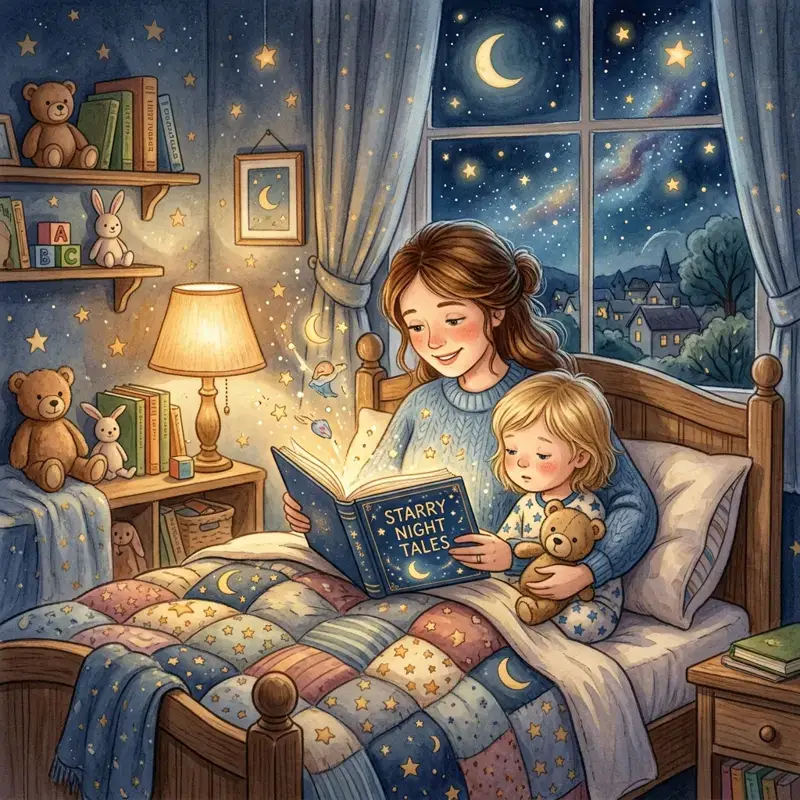
In today’s fast-paced digital age, screens are absolutely everywhere. From the television in the living room to the smartphone at the dinner table and the tablet in the car, modern toddlers are exposed to unprecedented levels of digital media. While thoughtfully curated, high-quality programming can undoubtedly be educational and provide exhausted parents with a much-needed break, allowing toddlers to use screens right before bed is a recipe for a sleepless night.
Replacing that final hour of screen time with a calming, tactile bedtime reading ritual is one of the most effective, scientifically backed ways to ease the difficult transition from a busy day to a restful night. Here is a guide on why digital screens sabotage sleep and exactly how to replace them with storytelling, created by our pedagogical children’s story assistant Düşle.
The Science: Why Screens Sabotage Toddler Sleep
To understand why your toddler fights sleep so aggressively after watching a cartoon, you must look at how digital screens interact with the human brain, specifically, a developing brain.
- The Melatonin Block: The human circadian rhythm relies heavily on light cues. As the sun sets, our brains naturally begin producing melatonin, the hormone responsible for making us feel drowsy. However, the bright, artificial blue light emitted by tablets and smartphones mimics daylight. When a toddler stares closely at a screen, their brain is tricked into thinking it is still high noon, completely halting melatonin production.
- Dopamine Loops and Hyper-Stimulation: Children’s television shows and tablet games are engineered to be highly stimulating. Rapid scene changes, bright flashing colors, and constant audio cues trigger rapid dopamine hits in a child’s brain. This neurochemical stimulation raises their heart rate and puts their nervous system into a state of high alert, which is the exact opposite of the biological state required for sleep.
The Meltdown: Why Removing the Tablet is So Hard
Every parent knows the agonizing meltdown that occurs when you finally try to take the tablet out of a toddler’s hands at 7:30 PM.
This meltdown happens because the child is experiencing an abrupt dopamine crash. You are not just taking away a toy; you are abruptly halting a powerful stream of neurochemical stimulation. Also, toddlers lack the language skills and emotional regulation to process this sudden loss, resulting in screaming, crying, and aggressive resistance. To stop the bedtime battles, parents must stop treating the removal of the screen as a punishment and start treating it as a planned, gentle transition into a highly rewarding toddler bedtime story routine.
Step-by-Step Solution: Replacing Screens with Stories
You cannot simply take a tablet away and expect a toddler to immediately lie down in a dark room. You must replace the high-stimulation activity with a low-stimulation, high-connection activity.
Step 1: The “Two-Hour” Rule
The most critical step is establishing a firm, non-negotiable timeline. Pediatric sleep experts universally recommend establishing a strict “screen-free zone” starting exactly two hours before you intend for the child to be asleep. If bedtime is 8:00 PM, all televisions, tablets, and phones must be turned off by 6:00 PM. This provides the child’s brain with enough time to clear the excess dopamine and begin the natural, slow production of melatonin.
Step 2: The Physical Decoupling
Do not let the child associate their bedroom with screen time. The bedroom should be a sacred space reserved strictly for sleeping, dressing, and reading. If you allow your child to watch cartoons while lying in bed, their brain will begin to associate the physical bed with digital stimulation rather than rest. Ensure all screen use happens in the living room or kitchen, physically decoupling the technology from the sleep environment.
Step 3: Using Personalized Stories as a Reward
When it is time to turn off the screen in the living room, you must offer an immediate, highly desirable alternative. This is where personalized storytelling becomes your greatest parenting tool.
Instead of saying, “Turn off the iPad, it’s time to sleep” (which sounds like a punishment), say, “It’s time to say bye-bye to the iPad because we get to go read a special story about YOU!” Children are inherently egocentric and are far more engaged when they are the main character of a story. Hearing their own name, their favorite toy, or their pet dog woven into a narrative captures their imagination instantly. It makes the transition away from the screen feel like an exciting reward and an exclusive bonding moment with their parent.
The Cognitive Benefits of the Switch
Replacing screens with physical books does more than just improve sleep latency (how fast they fall asleep). As detailed in our guide on reading bedtime stories and child development, this nightly switch has massive cognitive benefits.
When watching a screen, the child is entirely passive; the imagery is provided for them. When listening to a story, the child must actively work to visualize the scenes in their mind, exercising their spatial reasoning and abstract thought centers. On top of that, reading together requires physical proximity. Snuggling closely to read a book provides deep pressure stimulation and skin-to-skin warmth, releasing oxytocin (the bonding hormone). This sense of security repairs any emotional disconnects from the day and allows the child to feel truly safe enough to surrender to sleep.
Prevention: What to Do When They Beg for “Just One More Video”
Consistency is the armor that protects your routine. The first few nights you enforce the two-hour screen-free rule, your toddler will likely protest aggressively.
- Hold the Boundary: Do not negotiate. If you say “okay, just two more minutes,” you are teaching them that their protests work, and the tantrums will only escalate the next night.
- Use Visual Timers: Toddlers do not understand the abstract concept of time. Use a physical sand timer or a visual kitchen timer. Say, “When the sand runs out, the iPad goes to sleep, and we go pick out our books.” When the timer finishes, gently but firmly take the device and immediately pivot to the book selection process.
- Out of Sight: Once the device is turned off, put it in a drawer or a high cabinet. Out of sight genuinely means out of mind for a toddler. If the tablet is sitting on the bedside table while you are trying to read a story, it will serve as a constant, agonizing distraction.
When to Seek More Help or Watch for Edge Cases
If you have successfully eliminated screens before bed, established a calming reading routine, and your child is still completely unable to fall asleep for hours, taking a deeper look at their daily schedule is required. Ensure they are getting enough vigorous physical activity during the day to physically exhaust their bodies. Additionally, evaluate their daytime nap schedule. As toddlers approach age three, a late afternoon nap can severely interfere with nighttime sleep drive. If severe insomnia persists despite perfect sleep hygiene, consult your pediatrician to rule out issues like sleep apnea or restless leg syndrome.
Quick Summary
- Screens suppress melatonin: Blue light from digital devices tricks the brain into thinking it is daytime, preventing the release of sleep hormones.
- Screens overstimulate the brain: The rapid scene changes in videos cause dopamine spikes, making winding down physically impossible for toddlers.
- Enforce the Two-Hour Rule: All screens should be completely turned off at least two hours before the target bedtime.
- Pivot to personalization: Make turning off the screen easier by immediately offering a personalized story where the child is the hero.
- Decouple screens from the bed: Never allow screen use in the bedroom to ensure the bed is associated only with sleep and reading.
- Use visual timers: Help toddlers prepare for the transition by using a sand timer to signify when screen time is over.
Frequently Asked Questions
Is it okay if my toddler watches a very slow, calming video before bed?
Even if the content is slow-paced (like a lullaby video), the device is still emitting blue light that suppresses melatonin. What’s more, the light is shining directly into their eyes at a close distance. It is always better to transition to an audio-only lullaby or a physical book.
What if my child throws a massive tantrum when the tablet is turned off?
Stay calm and hold your boundary. Acknowledge their feelings: “I know you are mad that the game is over. It’s hard to stop playing.” Then immediately transition to the physical book. The tantrums will lessen significantly after a few days of unwavering consistency.
Can I read a bedtime story on my e-reader or phone?
Traditional e-readers (like a basic Kindle) that use e-ink and do not emit a backlight are generally fine. However, reading a story on a smartphone or a backlit tablet is highly discouraged, as the blue light will still interfere with their sleep cycle, and the device itself may distract them with notifications.
My child goes to daycare and I don’t get home until 6:30 PM. How do I fit in a routine?
If you arrive home late, prioritize connection over everything else. Skip the screens entirely in the evening. Focus on dinner, a quick bath, and a slightly longer bedtime story session to ensure they get that crucial 1-on-1 bonding time with you without the interference of digital media.
Do blue light blocking glasses work for toddlers?
While they may block some of the spectrum, they do not solve the issue of cognitive overstimulation caused by the rapid dopamine loops of games and videos. The best solution for a toddler is the complete removal of the screen, not a filter.
Create Magical, Screen-Free Bedtime Stories with Düşle!
Struggling to find stories that captivate your child’s interest night after night? Download the Düşle app. Düşle uses advanced pedagogical filters to generate unique, personalized bedtime stories starring your child. You can customize themes (like sharing, nature, or courage) to create a gentle, screen-free sleep transition. Download Düşle App Now and make bedtime magical!