How to Handle Nighttime Fears and Monsters in Children
Published Date:
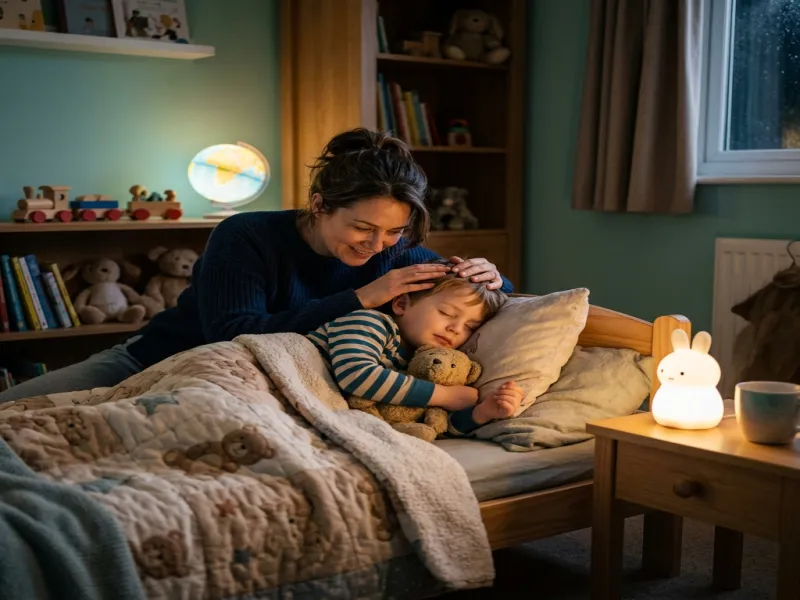
“Mom, there’s a monster under my bed!” It is a phrase that echoes through hallways in homes all over the world, usually long after the lights have been turned out and parents have finally sat down to relax. Nighttime fears are a nearly universal childhood experience. Whether it’s the classic monster in the closet, a fear of the dark, or generalized anxiety about being alone, these nighttime worries can turn bedtime into a nightly battleground.
For a child, the fear they feel in the dark is entirely real. Their rapidly developing imaginations, which serve them so well during daytime play, can easily turn a pile of laundry into a lurking goblin when the lights go out. Compounding the issue is the fact that children’s cognitive ability to distinguish between fantasy and reality is still maturing. You cannot simply use logic to explain away a monster that, to them, is undeniably present in the shadows.
However, as a parent, you have the power to transform bedtime from a time of terror into a time of safety, comfort, and empowerment. By understanding the root of these fears and responding with empathy and creativity, you can help your child build the emotional resilience needed to conquer the dark. Let’s explore effective, pediatrician-approved strategies for handling nighttime fears and banishing those pesky monsters once and for all.
Understanding Where Nighttime Fears Come From
To effectively address your child’s fears, it is helpful to understand their developmental origins. Nighttime fears typically peak between the ages of 3 and 6. During this stage, children experience a massive leap in cognitive development. Their imaginations expand exponentially, allowing them to visualize complex scenarios, both good and bad.
Simultaneously, they are developing a growing awareness of the world around them, including the concept of danger. However, they lack the life experience and logical reasoning skills to accurately assess risk. A sudden loud noise outside isn’t just a passing truck; in the dark, their brain interprets it as a threat.
Furthermore, the transition from the bustling activity of the day to the quiet isolation of the night can be jarring. The absence of daytime distractions forces a child to be alone with their thoughts, making it the prime time for anxieties to surface. If your child frequently wakes up upset from actual dreams rather than just pre-sleep fears, you might find our guide on children’s dreams and nightmare interpretation helpful for understanding their subconscious worries.
What NOT to Do: Common Pitfalls to Avoid
When faced with a crying, terrified child at 2 AM, it is easy to default to quick fixes that, unfortunately, often make the problem worse in the long run.
Never dismiss or mock their fear: Phrases like “Don’t be silly, there are no monsters” or “Big boys don’t get scared” are counterproductive. To your child, the fear is real. Dismissing it makes them feel misunderstood and isolated, which only heightens their anxiety.
Avoid over-validating the monster: While you shouldn’t dismiss the fear, you also shouldn’t act as if the monster is physically real. Opening the closet with a baseball bat or putting out “monster bait” reinforces the idea that there is an actual physical threat that needs fighting. You want to validate their feeling of fear, not the source of it.
Resist the urge to let them sleep in your bed: While co-sleeping is a personal choice, if your goal is for your child to sleep independently in their own room, bringing them into your bed when they are scared reinforces the idea that their room is dangerous and your bed is the only safe place. Instead, offer comfort in their room.
Empowering Strategies to Banish Monsters
The most effective way to help a child overcome nighttime fears is to empower them. You want to give them the tools to manage their anxiety and feel a sense of control over their environment.
1. The “Monster Spray” Technique
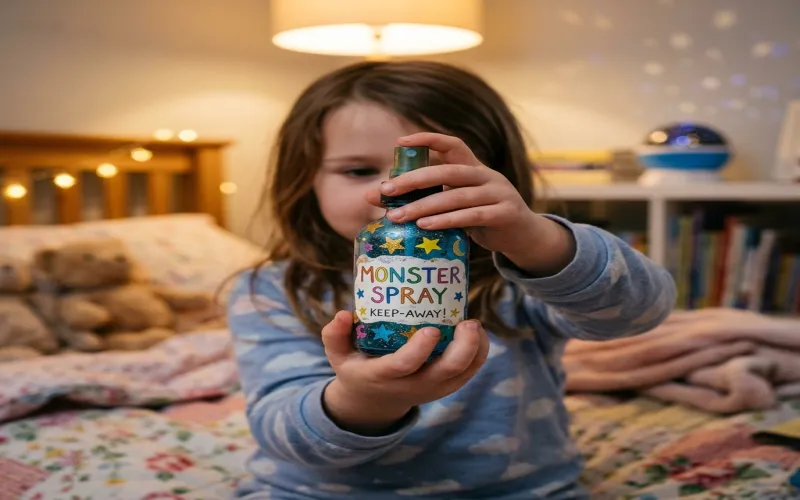
This is a classic, highly effective technique for the preschool crowd. Take a clean, empty spray bottle, fill it with water (you can add a drop of lavender essential oil for a calming scent), and decorate it with stars or stickers. Label it “Monster Spray.” Explain to your child that monsters hate this specific spray and will immediately run away if they smell it. Empower your child by letting them spray the closet, under the bed, and around the windows before getting into bed. This gives them an active role in creating a safe space.
2. Introduce a “Protector” Friend
A special stuffed animal or blanket can serve as a powerful transitional object. Present this object not just as a toy, but as a dedicated “protector.” Give the toy a name and a backstory—perhaps it’s a brave lion whose only job is to guard children while they sleep. Having a physical object to hold onto provides deep sensory comfort and acts as a proxy for the parent’s presence when they leave the room.
3. Take Control of the Lighting
Total darkness can be terrifying, but a room that is too bright can disrupt the production of melatonin, the sleep hormone. Find the middle ground with a soft, warm-toned nightlight. Avoid blue or white lights, as these simulate daylight and keep the brain awake. You can also leave the bedroom door slightly cracked to let in a sliver of hallway light, reassuring your child that you are just on the other side.
4. Create a “Worry Box”
For slightly older children whose fears are more generalized (like worrying about school or bad guys rather than monsters), a worry box is a fantastic tool. Have your child write down or draw their worries on small pieces of paper before bed. Then, they put the papers into a decorated box with a lid. Explain that the box will hold their worries for the night so their brain doesn’t have to.
The Power of a Positive Bedtime Routine
A predictable, calming bedtime routine is the foundation of good sleep hygiene and a powerful antidote to nighttime anxiety. When a child knows exactly what to expect each night, it reduces the fear of the unknown.
Begin winding down at least an hour before you want them to be asleep. Dim the lights in the house, turn off all screens (the blue light from tablets and TVs suppresses melatonin and can increase anxiety), and engage in quiet activities.
Reading bedtime stories is one of the best ways to end the day. It provides focused, one-on-one connection time with you, which is inherently reassuring. Choose books with positive, gentle themes, avoiding anything overly exciting or scary right before sleep. For more detailed advice on structuring the evening, read our comprehensive guide on positive bedtime ritual tips.
When to Seek Professional Help
Most nighttime fears are a completely normal part of childhood development and will naturally fade as your child grows and gains cognitive maturity. However, if your child’s fears are causing severe distress, leading to chronic sleep deprivation for the family, or if the anxiety begins spilling over into daytime activities (e.g., they refuse to go into their room even during the day), it may be time to consult your pediatrician or a child psychologist. They can help identify if there is an underlying anxiety disorder that requires specialized support.
Remember, patience is paramount. Helping a child overcome fear is a process, and there will likely be setbacks. Respond to their midnight calls with a calm, reassuring presence. By consistently providing safety, empathy, and empowering tools, you will eventually guide them out of the dark and into a peaceful night’s sleep.
Ready to make bedtime a dream instead of a battle? Download the Düşle app today for access to a vast library of calming, pedagogically-designed bedtime stories and expert sleep advice tailored to your child’s age. Get Düşle App Now